Gvt “Threatens” Businesses For Ditching Zim Dollar


Zimbabwean News You Can Trust
Government yesterday threatened to unleash the Financial Intelligence Unit (FIU) on retailers refusing payment in the local currency or limiting the number of items consumers can buy in Zimdollar, which they say has become highly unstable.
The local currency, which was reintroduced in 2019 after a decade of multicurrency system, is trading at a 100% premium on the parallel market where it is pegged at between $2 100 and $2 200 to the greenback; and US$1 036 on the official market.
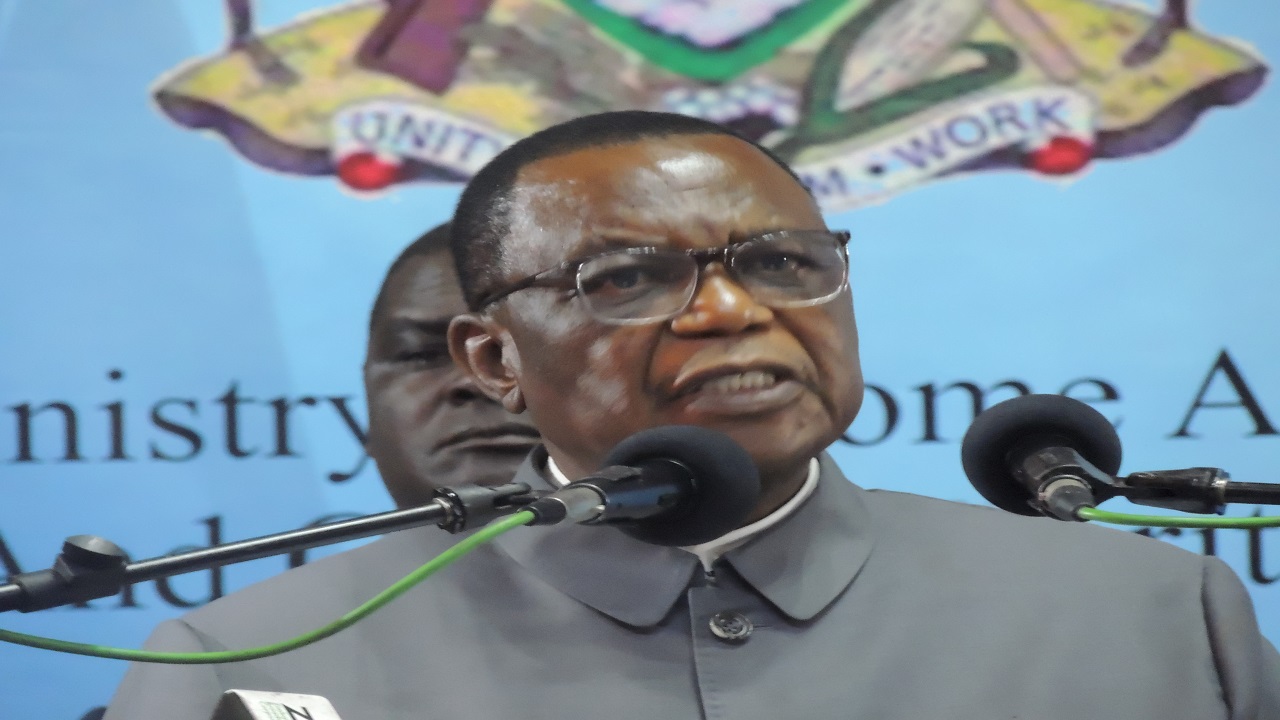
An alarmed government urged the nation to be calm in response to the sharp decline of the Zimdollar with Vice-President Constantino Chiwenga telling participants at the Zimbabwe International Trade Fair International Business Conference in Bulawayo on Wednesday that authorities were putting measures in place to maintain exchange rate stability.
“The transitory exchange rate volatility in the parallel market witnessed in the economy for March this year is merely a reflection of the store of value demand for foreign currency,” Chiwenga said.
“Bold measures are being implemented by government to foster price and exchange rate stability in the economy.
“These measures include tight monetary and fiscal policy, insistence on value for money for government procurement and effective monetary and surveillance by the Financial Intelligence Unit.”
Some consumers told NewsDay that retailers had put a moratorium on how much stock customers could buy with the Zimdollar.
It was the same with other products such as cooking oil, meat and mealie-meal, including beverages at some retail shops in the capital where retailers in the capital and other major cities were selling selected goods excusively in US dollars.
“They are paying us in local currency but they are not accepting it at shops. It’s really sad,” a consumer told NewsDay.
An official at one of the country’s leading meat suppliers yesterday confirmed the limitations placed on consumers, but said this was to ward off unscrupulous businesspeople seeking arbitrage.
“There are some businesses trying to take advantage of the fact that we are selling in local currency to come a dump their Zimdollar stock and then sell the meat or merchandise they buy from us in US dollars.
“This has become prevalent, so to dissuade this practice we are limiting stocks on certain products,” said the official who spoke on condition of anonymity.
Some large retailers were also forward pricing, saying that the local currency was on a free fall and they were hedging to avoid possible exchange rate losses.
Others simply restricted purchases to two units on some products.Some of the products whose stocks are being limited included cooking oil and rice.
Finance deputy minister Clemence Chiduwa said the FIU was monitoring developments in the retail sector.
“We are getting reports that some supermarkets are demanding payment for certain products exclusively in US dollars,” Chiduwa said.
“The laws on Bank Use and Promotion Act apply the same way as trading in the parallel market.
“This is illegal and all operators are urged to abide by the laws. We are closely monitoring the market delinquency and deviance which is a violation of the law.
“The FIU is taking appropriate action against those who are exclusively accepting USD on certain products.”
He, however, acknowledged that the Zimdollar was losing value.
“The continued depreciation of the Zimdollar is due to inflationary expectations mainly driven by parallel market rates.The resultant instability due to chasing rates is negatively affecting all of us. Market players should focus on production and the generation of forex,” Chiduwa added.
Consumer Council of Zimbabwe (CCZ) executive director Rosemary Mpofu urged retailers to abide by the country’s laws.
Source Newsday