


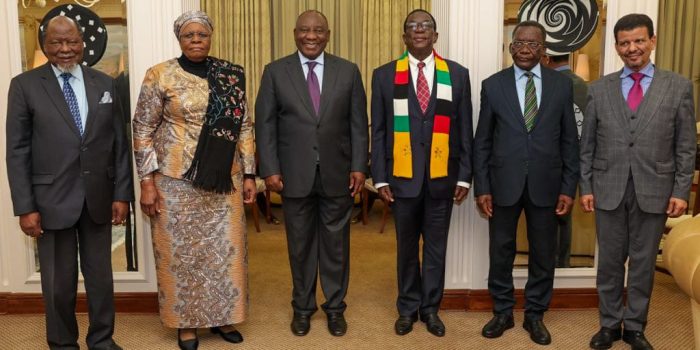
South African President Cyril Ramaphosa said liberation movements in Southern Africa need to recognise that many of the threats they face are internal.
Speaking at the 2025 Liberation Movements Summit in Johannesburg, Ramaphosa, who is also the leader of the ANC, Africa’s oldest liberation movement, stressed the need for countries to unite in efforts to tackle corruption and crime within their societies.
“For many of us, corruption and patronage have contributed to various degrees to the destruction of our social fabric, to the weakening of the state and to the disunity of our movements,” said Ramaphosa.
He added that the rivalry for public offices and resources has weakened their capacity as liberation movements to effectively meet the needs of the people.
“And we need to work together, drawing on each other’s experiences, to rebuild and renew our movements. Our movements were built through the struggles of the young people of the time. Today, we must rebuild our movements the same way.
“The impatience of young people is not something that we should fear. It is to be welcomed because it signals the determination of new generations of citizens to strive for a better life, for a more just society,” he added.
Ramaphosa said youth leagues should not serve merely as ceremonial branches of liberation movements but instead act as driving forces for ideological clarity, economic innovation, digital activism, and organisational renewal and unity.
He added that liberation movements are under pressure, facing challenges such as declining electoral support, changing demographics, and growing frustration among young people across several countries. He said:
These trends speak to a deeper crisis, the disconnect between our founding narratives and the lived realities of a new generation of young people. It is a generation that sees and appreciates less of our past victories and more of our present shortcomings.
Ramaphosa said the disconnect within the population has encouraged external forces to undermine sovereignty, independence, development, and security.
He noted that international actors often exploit the legitimate grievances of the people to attack progressive governments, pointing to a resurgence of unilateralism, neocolonialism, and imperial exploitation.
Ramaphosa warned that true freedom cannot be achieved without the liberation of women, arguing that society cannot prosper if women are excluded.
He stressed that if girls are unable to finish school, if women struggle to find decent work or run businesses, if they do not receive equal pay for equal work, or if they are vulnerable to violence and abuse, then freedom will remain incomplete and societies will continue to suffer poverty.