


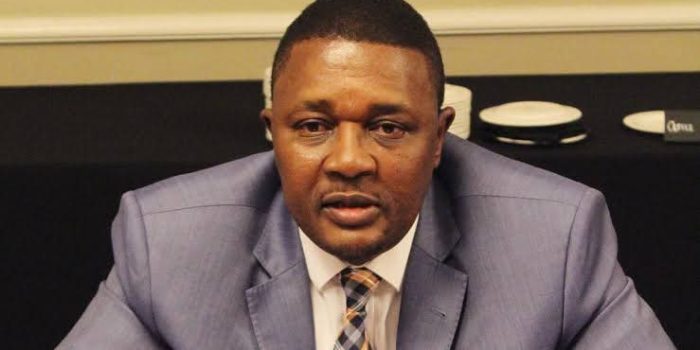
Article By Reason Wafawarova
I. Of Illness and Injustice
Walter Mzembi lies in a fragile state at Parirenyatwa Group of Hospitals—Zimbabwe’s flagship but crumbling referral institution. His swollen limbs and enlarged heart are not only signs of a critical medical condition, but also of a state that punishes with prolonged prosecution instead of fair trial, and neglect instead of care.
The 60-year-old former Tourism and Foreign Affairs Minister, arrested on June 14 after returning from seven years of exile, has become the latest political figure to be entangled in Emmerson Mnangagwa’s complex vendetta-driven legal machinery—a system that preaches constitutionalism by day and weaponises detention by night. Now seriously ill and reportedly having collapsed while in custody, Mzembi is not just a patient in need of urgent cardiac care. He is the latest pawn in a prolonged game of “lawfare”—the deliberate abuse of the legal system to punish, humiliate, and neutralise political dissenters.
And in Zimbabwe, as Mzembi’s plight reminds us, even illness becomes a political act.
II. Exile, Return, and the Unforgivable Sin
Mzembi’s “crime” is not merely what the charge sheet claims—corruption allegations from over a decade ago when he ran the Tourism Ministry. If corruption was indeed a crime under this administration, the very oxygen inside ZANU-PF Headquarters would be declared contraband.
No—Mzembi’s sin was to return. To believe in reconciliation. To believe that time heals political rifts. That belief—however naïve—has become a death sentence.
After the 2017 coup that removed Robert Mugabe, a purge followed. The so-called G40 cabal, of which Mzembi was a known associate, was chased out with the ferocity of a hyena defending stolen meat. Those who fled—like Saviour Kasukuwere and Jonathan Moyo—are still labelled fugitives. Those who stayed—like Ignatius Chombo—rot in an unending judicial limbo. And those who dared to come back—like Mzembi—are swiftly greeted by cold steel cuffs, press leaks, and remand prison cells.
The courts become theatre. Justice becomes spectacle. And prison becomes punishment before trial.
III. Bail as a Battlefield
Zimbabwean law is clear on one thing: pretrial detention is not punishment. Bail is a constitutional right—not a privilege to be granted based on political calculations. Yet in practice, bail is denied with tragic consistency to those deemed inconvenient to the state.
We saw it with Job Sikhala, denied bail countless times over spurious charges. We saw it with journalist Hopewell Chin’ono, who spent weeks in prison for daring to speak uncomfortable truths. Now Mzembi lies in a hospital bed—technically still a prisoner—while the legal system waits to decide whether he deserves liberty enough to access proper care.
When bail is turned into a form of slow death, we must ask: What has Zimbabwe become?
Mzembi may have once sat at the table of political privilege, but his current predicament places him squarely in the shoes of ordinary Zimbabweans whose freedoms are casually curtailed and whose illnesses are met with institutional indifference.
IV. Parirenyatwa: A Mirror of National Rot
Mzembi is not just on trial in court; he is on trial inside Parirenyatwa Hospital—an institution once revered across the region, now reduced to a graveyard of expired drugs, rusting machines, and demoralised staff.
Medical personnel at the hospital, speaking to journalist Hopewell Chin’ono, admitted the obvious: they are not equipped to handle his case. They lack the essential drugs. They lack specialist cardiac care. They lack the tools to keep a prominent detainee alive. If they cannot treat a former Cabinet Minister, what hope is there for the rural grandmother with hypertension? For the unemployed youth with kidney failure? For the child with cancer?
Mzembi’s swollen legs are an indictment. Not just of the Ministry of Health. Not just of the prison system. But of a ruling elite that invests billions in luxury jets, motorcades, and vanity conferences while presiding over the slow death of its people.
V. Politics by Persecution: Mnangagwa’s Doctrine of Fear
Let us call this what it is. Mnangagwa’s regime does not seek justice—it seeks dominance. The pattern is unmistakable. From Saviour Kasukuwere being barred from contesting elections to Sikhala’s cruel prolonged detention, to the unexplained deaths of figures like Tonderai Ndira, we have seen perfected the art of fear.
Mzembi, once seen as a reform-minded young technocrat, is now simply a body through which a message is sent: “Do not return. Do not challenge us. Do not believe in mercy.”
The irony? Many of those being persecuted once served the system they now flee from. They were enablers of state machinery that devours dissent. But redemption is not a crime. And vengeance is not justice.
VI. A Tale of Two Prosecutorial Realities
Compare Mzembi’s experience to that of Kuda Tagwirei or Wicknell Chivayo—men who should be under active investigation for looting the state, if Zimbabwe were a country governed by law. Chivayo walks free, gifting vehicles and quoting scripture. Tagwirei controls fuel, mines, and political appointments. Yet Mzembi, sick and powerless, lies chained to a collapsing hospital bed.
Justice in Zimbabwe wears designer suits and dines with the accused.
VII. Precedents: The Paradza Case Revisited
We’ve seen this script before. In 2004, Justice Benjamin Paradza was arrested for “interfering with justice” over a personal legal matter. The prosecution was thin. The intent was clear: neutralise an independent judicial voice.
Paradza fled the country and became a refugee—just like Mzembi did. Just like dozens of others have since.
The message then, as now, was the same: Zimbabwe is not safe for dissenters, even within its ruling party.
The irony is Walter Mzembi was inspired by Mnangagwa’s recent gazzetted pardoning of Benjamin Paradza – at the request of the Paradza family – reportedly on medical grounds. Mzembi was warned to ensure his pardoning was gazzeted too before crossing into Zimbabwe – but he was naive enough to trust a third-party gentleman’s agreement.
VIII. Human Rights, Not Just Headlines
Human rights organisations have called for Mzembi’s release on medical grounds. This is not about sympathy for a former minister. It’s about precedent. It’s about preventing a country from becoming a place where illness is weaponised, and where trial by health crisis becomes a form of execution.
The right to health is not suspended by arrest. The right to fair trial is not erased by political memory. And the right to life is not conditional on party loyalty.
IX. Conclusion: Of Collapsed Hearts and Collapsing States
Walter Mzembi’s enlarged heart is not the only thing struggling to keep rhythm. So is the heart of the nation.
A country that jails the sick, denies bail for convenience, and cannot even equip its flagship hospital is a country teetering on the edge—not of recovery, but of collapse.
We can disagree on Mzembi’s politics. We can debate his legacy. But we cannot, must not, accept that pretrial punishment is normal. We cannot accept that illness in detention is a death sentence. And we dare not remain silent while vengeance masquerades as justice.
For if even the powerful are now reduced to this level of state cruelty, then what chance does the ordinary citizen have